Roofing Questions, Answered:
Costs, Permits, Insurance and Hiring
51 questions Valley homeowners ask before a repair or re-roof, answered in plain language with the 2026 numbers and the rules that apply.
This page answers 51 roofing questions for Los Angeles and the San Fernando Valley in eight sections: costs, insurance, permits and Title 24, fire zones, timelines, materials, hiring a roofer, and working with Roofing RIB Company. Prices are 2026 planning ranges compiled from published cost guides; your written quote sets the real number.
Every answer about a law, code or permit links its primary source in the Sources list. For a roof-specific answer, book a free inspection or call (818) 600-6707.
Find Your
Question
What a Roof
Costs in 2026
For a typical 1,500–2,500 sq ft home with architectural shingle, plan on $12,000–$25,000, which works out to about $600–$1,200 per square of 100 sq ft. Tile and standing seam metal cost more per square foot. These are 2026 planning ranges from published guides, not a price list; a written quote after a free inspection sets your number. See the roof replacement cost guide.
Planning figures for 2026: concrete tile $10–$18 per sq ft, clay tile $15–$25 per sq ft and standing seam metal $13–$21 per sq ft installed. On flat roofs, plan $4.50–$8 per sq ft with torch-down and $5–$9 per sq ft with TPO. Asphalt shingle is usually priced per square, $600–$1,200. Pitch, layers to remove and decking repairs move a real quote inside or outside these bands.
Most leak and flashing repairs fall between $350–$1,200. A repair that means opening the roof, such as rotted decking or a failed flat section, starts at $1,500 and up. Tile, metal and flat roofs sit toward the top of each band because the work is slower. The written price comes after the roof is inspected, before any work. More on roof repair.
Torch-down modified bitumen runs $4.50–$8 per sq ft and heat-welded TPO $5–$9 per sq ft, installed. When the membrane is dry and still bonded, a silicone coating at $2–$4 per sq ft can buy years instead. Ponding fixes, new scuppers and tapered insulation are priced separately because not every roof needs them. See flat roof repair and replacement.
A silicone coating over a sound low-slope roof plans at $2–$4 per sq ft, against $4.50–$9 per sq ft to replace the same roof. The price includes cleaning, priming where needed and repairing seams and drains first. Acrylic systems are quoted per roof. A coating is only worth paying for when a moisture check shows the roof underneath is dry. Details on roof coating.
An emergency tarp or dry-in plans at $250–$600, depending on the size of the damaged area and how steep the roof is. When we make the permanent repair, the tarp cost is credited toward it. Storm and wind damage repairs that follow typically run $850–$1,750. See emergency roof repair.
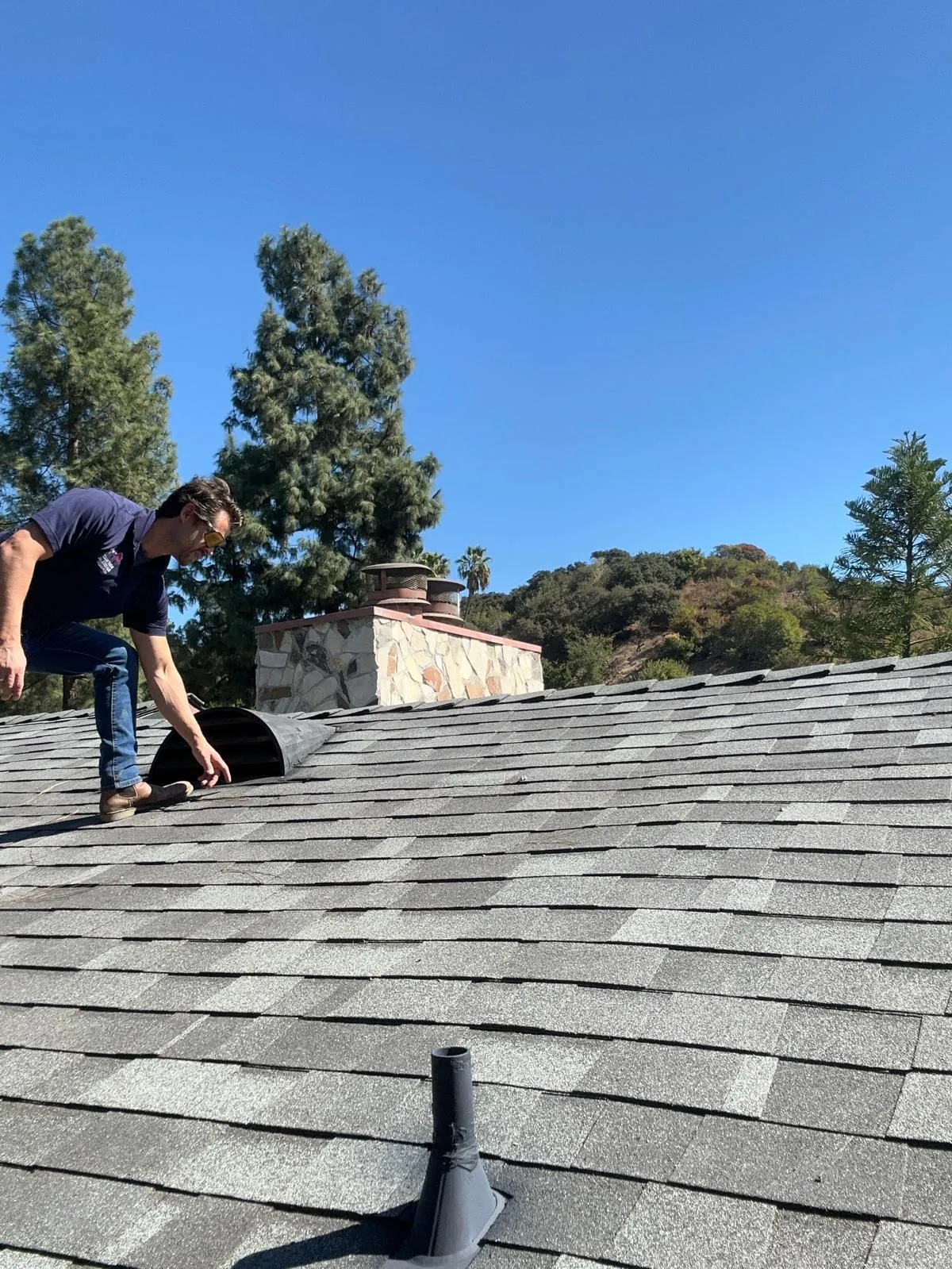
Yes. A roofer walks every slope, checks flashing, valleys, penetrations and drainage, looks at the attic side where it can be reached, and gives you photos with a repair-or-replace recommendation in writing. You owe nothing whether or not you hire us. A roof certification for a sale or refinance is priced separately. See roof inspection.
Most of the cost is labor and things you never see: tearing off one or two old layers, hauling and disposal fees, replacing rotted decking, new underlayment, metal flashing at every wall and vent, ventilation, the permit and the final inspection. Materials are only part of it, which is why a cheap quote that skips the tear-off or the flashing rarely stays cheap.
Insurance and
Storm Damage
Usually only when a covered event caused the damage, such as wind, hail or a falling tree. Policies generally exclude wear, age and poor maintenance, so an old roof that simply wore out is rarely paid for. Read the roof section of your own policy, including any age-based settlement terms, and call your agent before assuming either way.
Rain itself is not the cause an insurer looks at; the question is why water got in. A leak through shingles lifted by a windstorm is commonly covered along with the ceiling damage. A leak through cracked pipe boots or worn flashing on an aging roof usually is not. Interior water damage may be treated differently from the roof repair.
Compare the repair price with your deductible first. Many leak repairs cost less than a typical deductible, and small claims can stay on your record for years. A claim makes sense for larger sudden damage, such as a tree through the roof or wide wind loss across several slopes. Get the written estimate before you call the insurer.
Photograph the damage from the ground and inside the house as soon as it is safe, with the date visible. Keep receipts for tarps and emergency work, because most policies expect you to prevent further damage. Ask the roofer for dated photos from the roof and a written description of what failed and why, then send everything to the adjuster.
Ask the insurer for the denial in writing with the policy language it relies on. If the adjuster called storm damage wear, request a re-inspection and send a contractor's written report with dated photos showing the cause. Keep every letter and note every call. A public adjuster or attorney is an option for large disputed losses.
Sudden damage from a falling tree or limb is one of the most commonly covered roof losses, and removing the tree from the house may be covered too. Coverage for removing a tree that fell without hitting a structure is often limited. Stop the water first, document everything, and keep the debris until the adjuster has seen it.
Still Have a
Question?
Tell us about your roof and a roofer will call back with an answer for your house, or schedule a free inspection.
Prefer to talk it through?
(818) 600-6707Permits and
Cool-Roof Rules
Yes. Inside the City of Los Angeles, LADBS issues most re-roofs with a Class A or B covering under 6 lb per square foot as an express permit, with no plan check. Heavier tile goes through the regular permit process. A licensed roofer pulls the permit and schedules the final inspection; the closed permit belongs in your house records. See the permit guide.
It depends on the scope. A section that gets torn off and rebuilt is handled like a re-roof and permitted that way. For a small patch, the roofer should confirm with the building department for your address, LADBS, Burbank or Glendale, whether a permit applies, and list it in the quote if it does. Ask before work starts, not after.
The fee is set by the city that issues the permit and depends on the job, so it varies from roof to roof. In our written quotes the permit appears as its own line, which lets you compare bids fairly. Be wary of a quote with no permit line at all; it usually means the work is meant to go unpermitted.
Title 24, Part 6 is the California Energy Code. The 2025 edition applies to permit applications filed on or after January 1, 2026. For a home re-roof, its cool-roof requirements apply when more than half of the roof is replaced, unless the house qualifies for an exception, for example R-38 insulation in the attic or ductwork kept out of the attic. See the cool-roof guide.
In the City of Los Angeles, a residential replacement of more than 50% of the roof must use a cool roof product labeled by the Cool Roof Rating Council. The 2025 Energy Code sets 0.20 aged solar reflectance, 0.75 thermal emittance or SRI 16 for a steep-slope roof in our climate zone, with exceptions for well-insulated attics.
Yes, when more than half of a home's low-slope roof is replaced, recovered or re-coated. In Climate Zone 9 the 2025 Energy Code sets 0.63 aged solar reflectance, 0.75 thermal emittance or SRI 75. White TPO meets that; a coating or cap sheet is chosen by its rated aged values, not its color alone.
Neither city uses LADBS. The City of Burbank issues reroofing as a Tier 1 permit through Burbank Online Permits. The City of Glendale takes roofing permits through the GlendalePermits portal and asks for the new product's manufacturer, material and color when the material changes. Toluca Lake straddles the line, so the address decides which city applies.
Climate Zone 9 under the California Energy Commission's map, including every ZIP code we serve in the Valley, Burbank and Glendale. That zone sets which cool-roof numbers apply to a re-roof: the steep-slope values for most homes and the stricter low-slope values for flat sections, additions and commercial roofs.
Fire Zones and
Class A Roofs
Class A is the highest of the three fire ratings, A, B and C, given to roof coverings and assemblies after standardized fire testing. Asphalt shingle, clay and concrete tile, metal and many low-slope systems can all be installed as Class A assemblies. In hillside fire zones Class A is a requirement, not an upgrade.
Yes. State law requires at least a Class A covering when more than half of a roof in a Very High Fire Hazard Severity Zone is replaced within a year, and for any covering applied in a repair there. LADBS lists the same Class A requirement for City of Los Angeles re-roofs in that zone. See the Class A guide.
For an address in the City of Los Angeles, look the parcel up on ZIMAS and open the fire hazard layer. For Burbank, Glendale and unincorporated areas, use the CAL FIRE fire hazard severity zone map or ask the city. Zones follow parcel lines, not neighborhood names, so neighbors on the same street can fall on different sides.
Mostly the hillside parcels: the hills south of Ventura Boulevard in Sherman Oaks, Studio City, Encino, Tarzana and Woodland Hills, the Verdugo foothills above Glenoaks in Burbank, Glendale's hillside canyons, and the northern foothills of Granada Hills and Chatsworth. The flats are mostly outside it. Each service-area page explains its own fire-zone picture.
Under the state rule, any roof covering applied in a repair or alteration inside a Very High Fire Hazard Severity Zone must be at least Class A, not only full replacements. Replacing a few shingles with matching Class A material meets it; patching with a lower-rated product does not. Ask the roofer to name the rated product in the quote.
Timelines and
Rain Season
For a typical Valley home: 2–4 days on site for shingle, 1–2 weeks for tile or metal. Day one is usually tear-off and dry-in, so the house is protected overnight. Rain, a large decking repair or a change of material can add days. The permit and final inspection add scheduling time on either side of the work.
Plan on 2–5 days for a full replacement for a full replacement of a typical residential flat roof or garage conversion. A recoat of a sound roof takes one to two days. Larger commercial roofs are done in sections around the tenants, with each section left watertight at the end of the day.
Not properly. Underlayment, adhesives and membrane welds need a dry deck, and a wet deck trapped under new roofing causes problems later. Crews watch the forecast, tear off only what can be dried in the same day, and keep tarps on site. If rain arrives mid-job, the open area is covered and work resumes when it dries.
Late summer and early fall, before the first winter storms. Roofs are dry, crews are easier to schedule, and you choose the date instead of reacting to a leak. Mid-summer heat is workable with early starts. Winter jobs happen too, scheduled between storms with a tarp plan in place.
Call (818) 600-6707; leak calls are answered 24/7. During rain, an active leak gets a tarp or temporary dry-in the same day so the interior stops taking water. The permanent repair follows once the roof is dry. See emergency roof repair.
Materials and
Valley Heat
In Valley heat, architectural shingle typically lasts 20–30 years and three-tab shingle 12–20. Concrete and clay tile last 50 years or more, with the underlayment beneath them replaced around year 25–30. Standing seam metal runs 40–60 years, TPO 20–30 and torch-down 15–25. Attic ventilation and roof color move each number. See the lifespan guide.
Yes. The tile itself commonly outlasts two or three shingle roofs, but the felt or synthetic layer under it does not. A tile roof that leaks at 25 or 30 years usually needs new underlayment, with the same tile lifted off and relaid, rather than new tile. That is why tile costs more up front and less over time.
Usually. Cracked or slipped tiles are swapped for matching pieces, and a leaking section can be fixed by lifting the tile, replacing the underlayment and resetting the same tile. Full replacement is rarely needed unless the tile line is discontinued or badly broken across the roof. See tile roofs.
Homeowners should not. Clay and concrete tile crack under a misplaced step, and broken tile lets water reach the underlayment. Roofers step only on the lower third of each tile, near the batten, and often lay pads or remove tiles to make a path. If you need to see the roof, use a ladder at the eave or binoculars.
For most residential flats over garages and additions, two-ply torch-down is the proven, economical choice. For larger roofs and commercial buildings, heat-welded white TPO wins: fewer seams, strong welds and a reflective surface that meets cool-roof rules. A silicone coating is the option only when the existing membrane is still sound. See TPO, torch-down or modified bitumen.
They are less forgiving. Water drains slowly, so a clogged scupper or an open seam leaks sooner than it would on a steep slope. Most flat-roof leaks start at seams, drains and the joint where the flat section meets a wall or pitched roof. Clearing drains before winter and fixing ponding prevents most of them.
If the roof has fewer than about ten years left, usually yes. Panels have to be removed and reinstalled to re-roof under them later, which adds a separate cost. Re-roofing first lets the new roof and the panels age together. A roof inspection before signing the solar contract tells you which case you are in.
Light, cool-roof rated surfaces reflect more sunlight and keep the attic and the roofing itself cooler. Cool-roof architectural shingle, light concrete or clay tile, coated metal and white TPO all perform well. Pair any of them with balanced attic ventilation, which does as much for roof life as the material choice.
Hiring a Roofer
Safely
Use Check a License on the CSLB website. Enter the license number or business name and confirm the license is active, carries the C-39 Roofing classification or a classification that covers the job, and shows bonding and workers' compensation status. The name on the license should match the company on your contract.
Yes. In California, home improvement contracts over $500 must be written. A good roofing contract names the scope, the materials and brand, the decking allowance, the start and finish dates, the payment schedule, the permit, cleanup and the warranty terms, and is signed by both sides before work begins.
For a home improvement contract, the down payment cannot exceed $1,000 or 10 percent of the contract price, whichever is less. Later payments should follow work actually completed. A roofer asking for half up front on a typical re-roof is asking for more than the rule allows.
In most cases you can cancel a home improvement contract by midnight of the third business day after you receive a signed and dated copy. The contract should include the cancellation notice. Cancel in writing and keep proof that you sent it.
Ask for current certificates of general liability insurance and workers' compensation coverage, issued to the same business name that is on the contract. Check the workers' compensation status shown on the CSLB license record too. If an uninsured worker is hurt on your roof, the claim can land on you.
Every line that changes the price: tear-off and how many layers, disposal, a per-sheet decking allowance, underlayment type, the covering by brand and line, flashing, drip edge, vents, the permit, cleanup and the warranty. An itemized quote is the only way to compare two bids honestly.
Usually two separate things. The manufacturer's warranty covers defects in the material and is registered in the owner's name. The roofer's workmanship warranty covers installation mistakes such as flashing or nailing errors. Unapproved repairs or poor attic ventilation can void the material warranty, so keep both documents with the closed permit.
Working With
Roofing RIB Company
From our base in Sherman Oaks we work in Sherman Oaks, Studio City, Van Nuys, Encino, Valley Village, Valley Glen, North Hollywood, Toluca Lake, Tarzana, Burbank, Woodland Hills, Northridge, Reseda, Granada Hills, Canoga Park, Chatsworth, Glendale. Each neighborhood and city has a service-area page with its permit office, fire-zone rules and typical roofs.
Yes. The inspection, the photos and the written quote cost nothing, with no obligation. A roofer, not a salesperson, does the inspection, and the quote is itemized so it can be compared with any other bid you get. You do not need to be home for the visit, as long as the roofer can reach the roof safely.
Yes. Financing available; ask for the options with your written quote. The financing terms are set by the lender and shown to you in writing before anything is signed. Ask about the options when you book the inspection and compare them with paying in stages under the contract.
Roofing RIB Company has been roofing in Sherman Oaks and across the San Fernando Valley since 2016. Our reviews are public on Google and Yelp, and every regulatory statement on this site links its primary source. The roofer who inspects your roof belongs to the same local team that does the work.
Roof Replacement Cost in Los Angeles
Every line item explained →
GuideRe-Roof Permits
LADBS, Burbank and Glendale →
ServiceRoof Repair
Leaks, flashing, storm damage →
ServiceRoof Replacement
Shingle, tile, metal, flat →
Service AreasRoofing Across the Valley
17 neighborhoods and cities →
CityRoof Repair in Sherman Oaks
Our home neighborhood →
Sources
- LADBS Information Bulletin P/GI 2026-003, Express Permits (No Plan Check Required), effective 01-01-2026, revised 06-10-2026 · checked 2026-10-16
- California Energy Commission, 2025 Building Energy Efficiency Standards · checked 2026-10-16
- Cool Roof Rating Council, Chart of 2025 CA Energy Code Cool Roof Requirements (December 4, 2025) · checked 2026-10-16
- California Energy Commission, Building Climate Zones by ZIP Code · checked 2026-10-15
- City of Burbank Community Development, Building Permits · checked 2026-10-15
- City of Glendale Building & Safety, permit information · checked 2026-10-15
- CAL FIRE Office of the State Fire Marshal, Fire Hazard Severity Zones · checked 2026-10-15
- City of Los Angeles ZIMAS parcel lookup · checked 2026-10-15
- Contractors State License Board, Check a License · checked 2026-10-16
- Contractors State License Board, Home Improvement Contracts consumer guide · checked 2026-10-16
Let's Look at
Your Roof
Free inspection, written quote, permit pulled.
(818) 600-6707